
Mystery.

To start the story – it’s a bit of a mystery. There have been a number of possible answers but nothing has been proven. One of my cousins, Elizabeth Hook, was on the hunt for answers. She would regularly provide details of her findings to my mother. My mother was interested in knowing about her maternal grandmother.
One of the big things out of all this is I have met my great-grandmother – a little more about this at the end of this writing.
What has been found to date: the location of a birth certificate for Annie MEERMANN in Nogoa near Emerald, born 17 May 1879.
There are a number of online family trees that have a variety of other information which does not make any sense especially those that show she was born overseas.
So where to now? I am aware that Annie got schooling as she could read and write.
Since there is limited information Annie will begin her story when she married in 1899. The surname used is Williams – yet another mystery. So, 20 years on…
Married.
My name is Annie Williams and I am about to marry in Rockhampton at St. Paul’s Cathedral. It’s 7 June 1899. Henry Bluck will be my husband. We both met at Cullin-la-Ringo station near Emerald. I am 21 and he is 32. Thomas Parker officiated the ceremony. Our witnesses on the day were John William Rooney and Eliza Nelson. I think I added a year to my actual age, at the time of our marriage

Within four months we became proud parents. Our daughter Alice Bertha Eliza was born on 25 September 1899 at Springsure. Husband is a station hand at Cullin-la-Ringo station. Dr Nicloin was in attendance along with the nurse Mrs Sharp.
New Century.
The new century began and the future looks bright. Another year of wild weather. Then, it was summertime again when I gave birth to a beautiful girl whom we named Annie. She was born at the station. No medical professionals were in attendance only my husband who assisted with the birth. It was 19 January 1902. Henry at this time was a boundary rider at the station. He was 35 and I was 23, or was I?
Extremes.
I think the biggest issues with station life was the loneliness. I tried to keep busy but there was always other things to be done especially looking after our children. The weather was always extreme and caused exhaustion – one moment it was hot. Then there was hot rain which was followed by the dryness. I disliked the wind as it created so much dirt everywhere: part of being busy, I suppose.
It wasn’t too long before we had our first son. Charles arrived on 3 October 1905. He was born at Springsure. Dr. Routh and Mrs. Darcy were in attendance at the birth. Henry had now become a horse driver. We don’t really want to talk about my age again. Do we? We were still at Cullin-la-Ringo station.
Farleigh.
Eventually, we decided to move towards the coast and go a bit further north. We moved to Farleigh as husband mentioned around 1907.
We had moved to Beaumont Farm and husband was a farm labourer. We had a few head of cattle and began planting cane.
Vote.

I registered to vote and finally appeared on one of those rolls in 1908. I was classified as doing domestic duties. I certainly did – keeping and controlling the house, cooking, cleaning and helping my children learn about life. I was probably a progressive woman.
Just before Christmas, we had an early present when our daughter, Martha Jane, arrived on 23 December 1909. Nurse, Mrs. Higgin assisted with the birth. Again, I am asked my age!
Before too long, I gave birth to another daughter, Elizabeth – an early New Year present as she arrived on 27 December 1911. Jean Higgin was the nurse in attendance at the birth.
Fear.
Most of the next few years, husband has spoken about. I know he feared for his family back in England. My parents were in Australia and dealing with their own issues because of where they had come from in Europe so many years before.

It was a very worrying time for everyone including me attending to my mother who just couldn’t understand what was going on in this country. She had been here for well over 35 years and was treated badly just because of where she was born. I never understood the authorities.
The war finally finished towards the end of 1918 but the Mackay area had been dealt with its own destruction by mother-nature. As my husband said we move forward and rebuild – not only material things but our lives.
Set Backs.
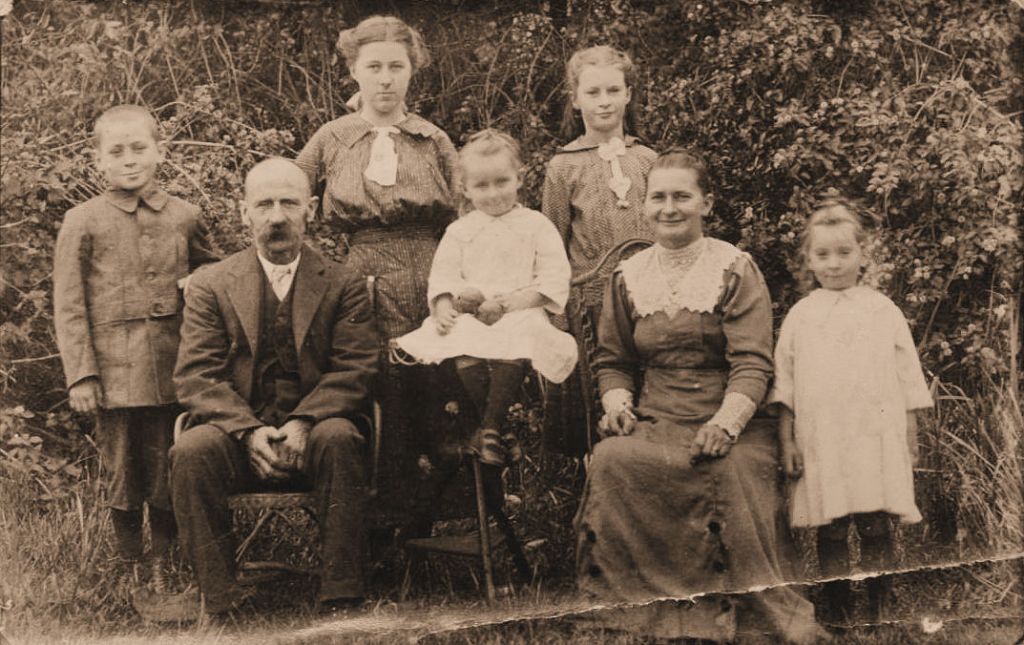
I got very used to setbacks especially when my beloved Henry was sent away to Peel Island just before the middle of 1921. I had attempted to get a permit to visit him and eventually got a train permit to do so.
During his time at the Island, we received a number of letters from him. I could feel his sadness in his writing. Our daughter, Bertha, was a cook at the local hospital and our Annie was working at the Farleigh Hotel. I think they set their minds on their work to stop thinking about father. Charlie was left to get the cane off and then be dealing with all the ups and downs of the farm. My mother died in 1926.
Eventually, husband came home but he wasn’t with us for long as he died in 1930.
We all had to step up to continue running the farm in extremely difficult economic times. Some days we had wondered if it was all worth it but Henry’s memories of his achievements kept us going.
1938.
My father died in 1938. I thought it was a blessing as the next year another war broke out and I don’t think he would have coped especially with how he was treated more than 20 years earlier. He had written a will and I was able to claim the land he owned. Not that it is in exchange for his life – I would have preferred him over a piece of land any day.

Destruction.
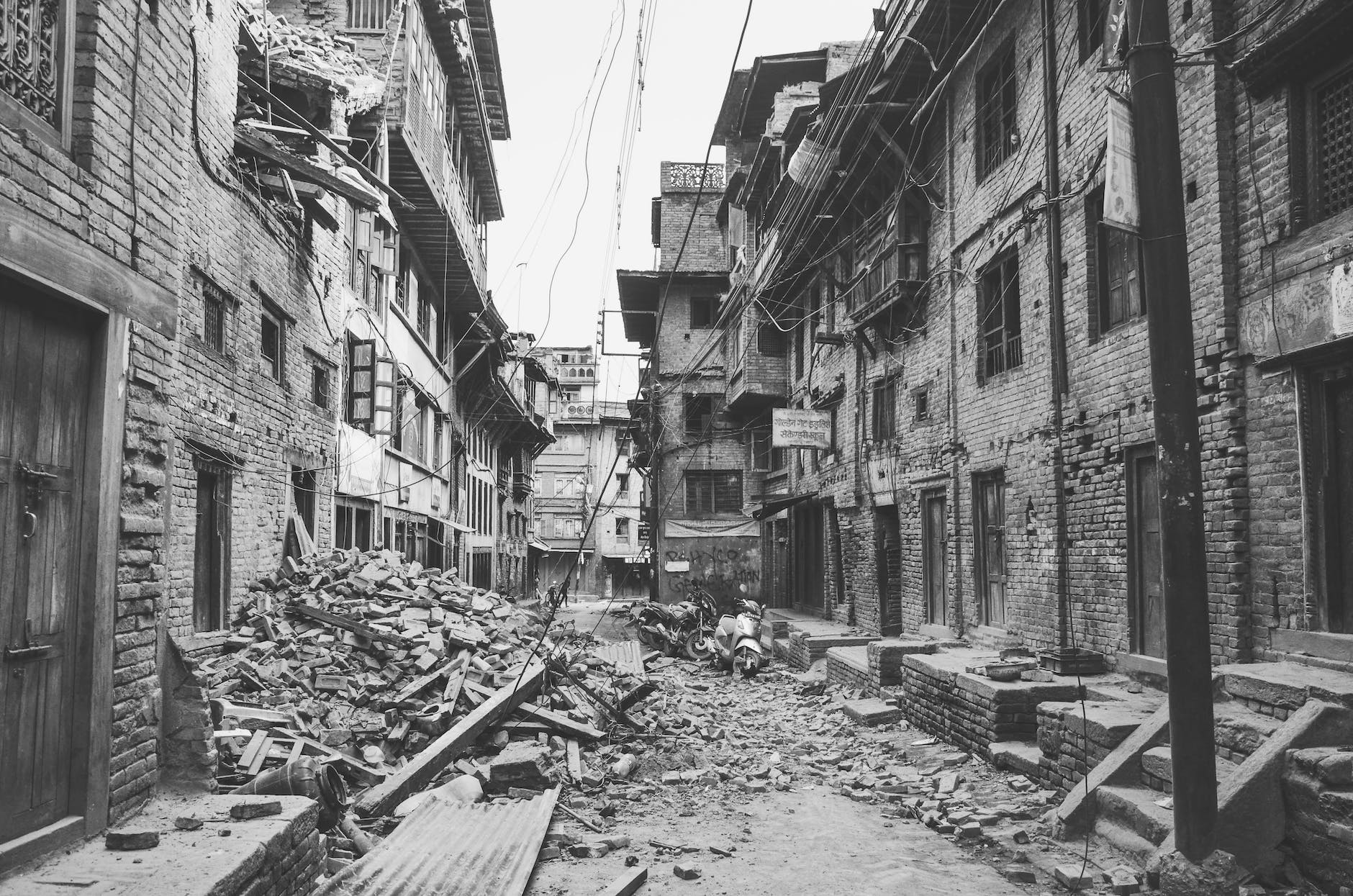
So many innocent lives destroyed in a war of power. The end results affecting many even locally as we dealt with foreign powers in many battles in the Pacific. I’ve always wondered what those in power get out of all the destruction.
Charlie was still busy with the cane. Most of my daughters had got married and had children of their own. Of course, I became a grannie.
My daughter Bertha died in 1954.
Mother nature continued her onslaught within the region – mostly extensive floods in the Valley. We still coped and got on with life.
Electric Light.
Electricity came to the district but I still preferred the old ways. Kerosene lamps and wood fires – cooking in a wood-fired oven was hard work but the results were too good to stop.
The Olden days – more like the golden days… Were so much better.
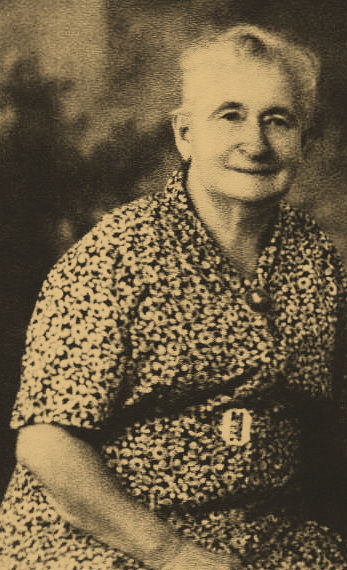
Annie Bluck – the matriarch – died on 20 October 1963. She was buried at the Mackay Cemetery on 22 October. She had become senile in her later years but remained strong-willed. She was about 87 when she died. She had a good life and being born in the Emerald area knew a lot about everything. She was survived by her children: Annie (61), Charles (58), Martha Jane (53) and Elizabeth (51).
Remember.
I will always remember my great-grandmother. Even today, as she is in my thoughts, I see her as I knew her. Always dressed in black and always wearing a black hat. She was in mourning the loss of her husband for over 30 years before. I was 7 when she passed into the other world.
ACKNOWLEDGEMENTS:
Henry & Annie Bluck marriage, Rockhampton: own collection – Approx. 1899
Bluck family: own collection – late 1910’s early 1920s
Annie Bluck at door: own collection – unknown date
Annie Bluck: own collection – dated 1952.
Others: WordPress
 Ancestor Family