I have been researching my ancestors for way over 40 years. If you have read my previous blogs you would already know how I started.
Self-Taught.
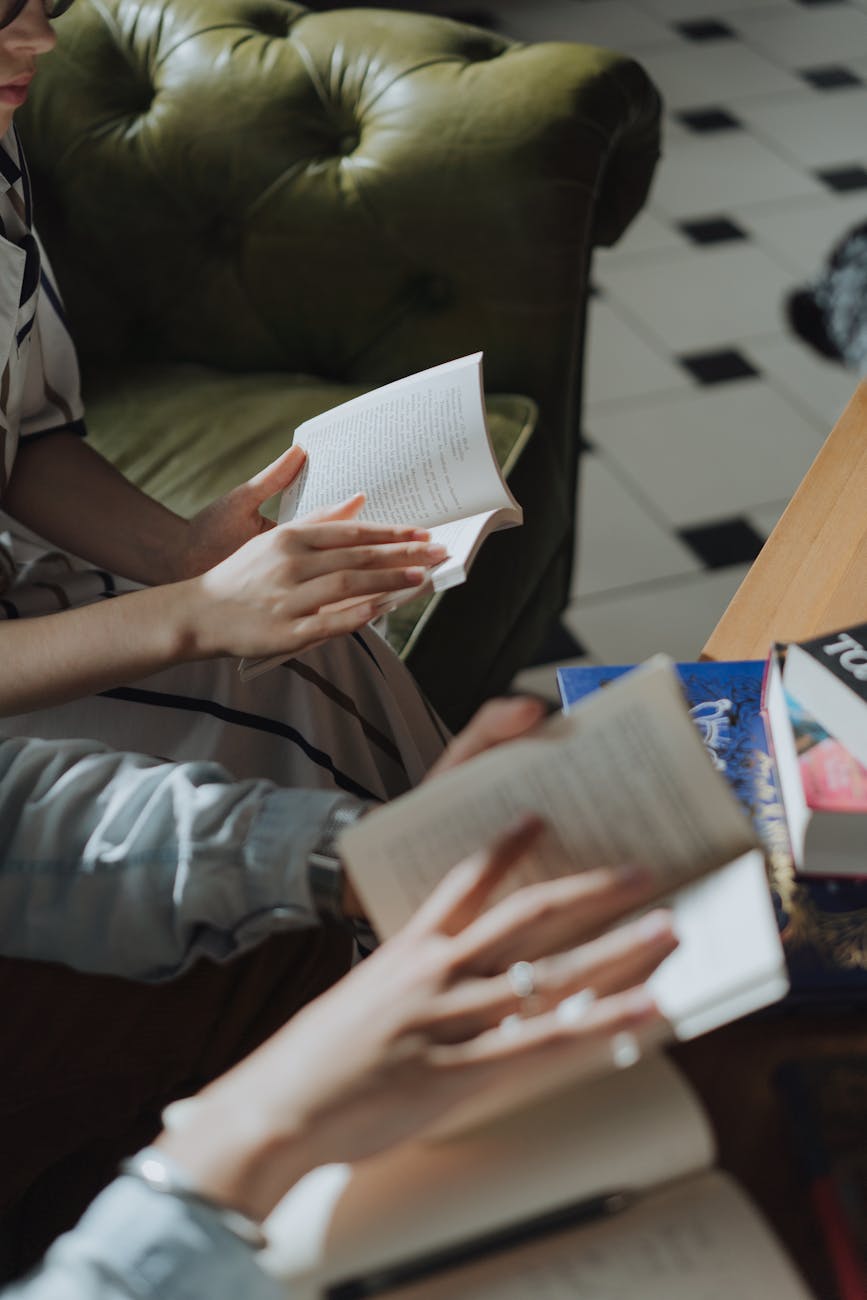
My own learning about how to research was by reading books relating to family history. I use the plural because what you need is not just in one book – it’s in many. As the years have passed my book collection has grown. I have read the majority of my purchases from front to back. I also admit not all the content in some books is useful. An example of this is a book that covers Europe. I’m not interested in all of Europe. I only read the sections of interest. I always read the introduction – check the chapter content and the index if there is one.
Biggest Mistake.
Going back to when I first commenced this journey, I was more interested in names places and dates. I know I committed the fatal mistake of not really recording my sources. (This has now changed.)
I have all my old notebooks, that I would write in from the 1980s – funny as it may be – I wrote the detailed source but not necessarily stating the place where I found it. A lot of the time, the place pops out of my head due to the memories I had at that time. Of course, these memories aren’t of an address location of the UK County record offices that I frequented.

Moving Forward.
So there was a time when life took over and I didn’t do that much research. This was usually when I was travelling abroad sometimes even in the United Kingdom – go figure! I do know I visited locations where my ancestors once lived – memory triggers – I shall call them.
I would remember a place’s name and I’d then get lost in the church or a graveyard – back then, no digital cameras so very different to what it is now. I have accumulated a vast number of printed photographs. Yes, I did write on the back of these (oops, in ink) so know the location but not necessarily the date! Nowadays – it’s digital camera – then it’s where are they now – on some SD card – no real idea of place names etc. You can only write so much on an SD card! I think this is one of our biggest issues these days – basically, click and forget it.
My Learning: UTAS.
COVID came along – family history was a saviour and then I found there were courses online so I signed up with UTAS.
I eventually obtained a “Diploma of Family History“. I commenced the course in February 2020. There were eight units. There was a cost involved with some of the units. Like most university courses, there is a lot of work and be aware you need to fit into the UTAS mindset. By the way, UTAS stands for the University of Tasmania.
NOTE: The certificate has been edited in various places.
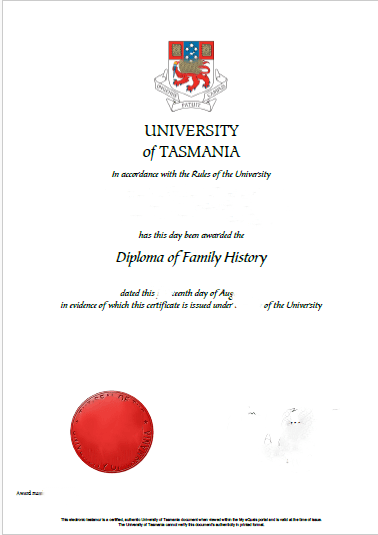
The units I completed were (in the order completed):
| Convict Ancestors |
| The Photo Essay An Introduction |
| Convicts in Context |
| Introduction to Family History |
| Place, Image, Object |
| Writing Family History |
| Oral History |
| Migrant Families |
What was disappointing about this course was that it was only graded as a pass or a fail. I still can’t get it around in my head that all the work that I did was just graded as a pass. I did keep my own scoresheet and I did extremely well throughout the entire course.
The units on offer today by UTAS are:
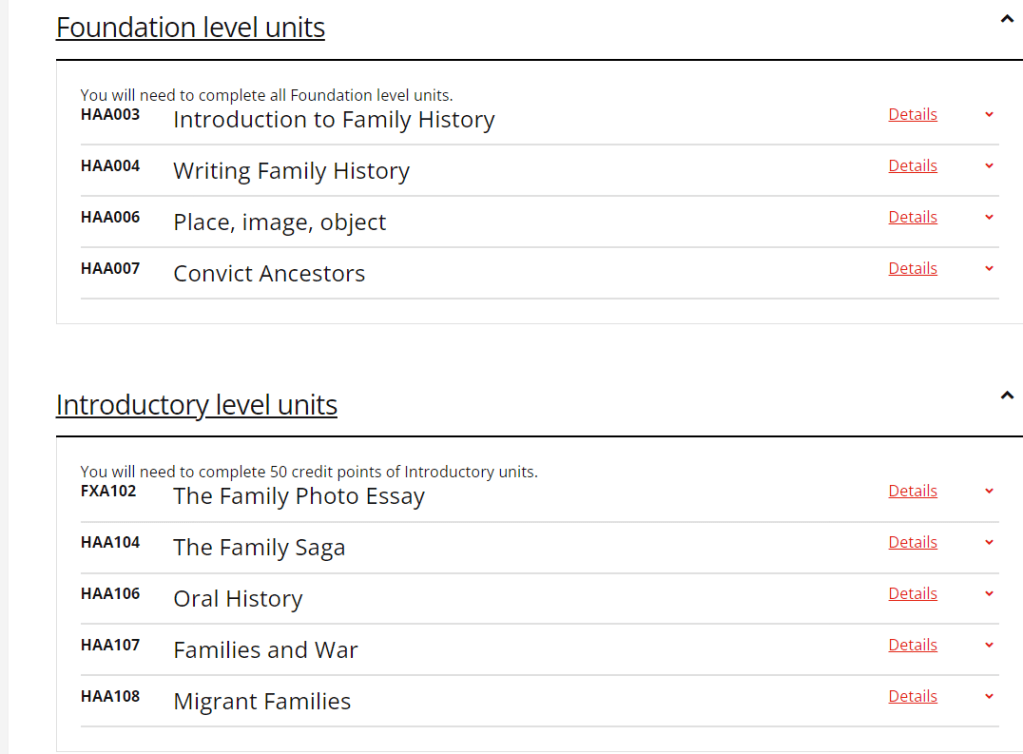
As you can see from the lists above one unit has changed: The Photo Essay An Introduction to The Family Photo Essay. One completely dropped and that was Convicts in Context. Two of the units on offer today were also available to me when I did my diploma and these were The Family Saga and Families and War.
Unit Cost.
If you were to do this university course today the cost of each unit has dramatically increased. The cost for commencing students ranges from $555-$2040 (per unit). The full fee charges range from $1906-$2695 (per unit).

These price changes were brought about by the Australian Federal Government when they increased the cost of basically non-essential learning. I’m not exactly sure if that’s what I should say but basically, that’s what it was.
I am fairly certain that these increases occurred just after I completed my diploma. There is help available for Australian residents via HECS.
My Learning: FutureLearn.
Over the past 18 months, I have been learning online via FutureLearn. I have concentrated mostly on genealogical subjects but have done others.

The family history-related subjects have been:
1. Genealogy: Research Your Family Tree
2. Early Scottish Palaeography
3. Learning from the Past
4. The Scottish Highland Clans: Origins, Decline & Transformation
5. Genetic Genealogy: Research Your Family Tree using DNA.
I know I have vast experience when it comes to doing research. However, it is always good to do refresher studies. I know from the FutureLearn subjects I have learnt several things. Most of the material is basic. The exercises always get the grey matter working to resolve the issue presented. I must admit I did enjoy the transcribing exercises.
Downside.
On the downside with FutureLearn, the subjects I have taken have been “done” before. Some of the links are not secure. My computer doesn’t allow them to even be opened. I think this is good in this day and age with all the scams and viruses that seem to be everywhere. These viruses are now even hidden within PDFs!
Unlimited.
When I first started out with FutureLearn, there was, and still is, an opportunity to get a free month. After this time you need to pay monthly. However, at different times there are big discounts given if you take out a subscription for 12 months and that’s what I have done.
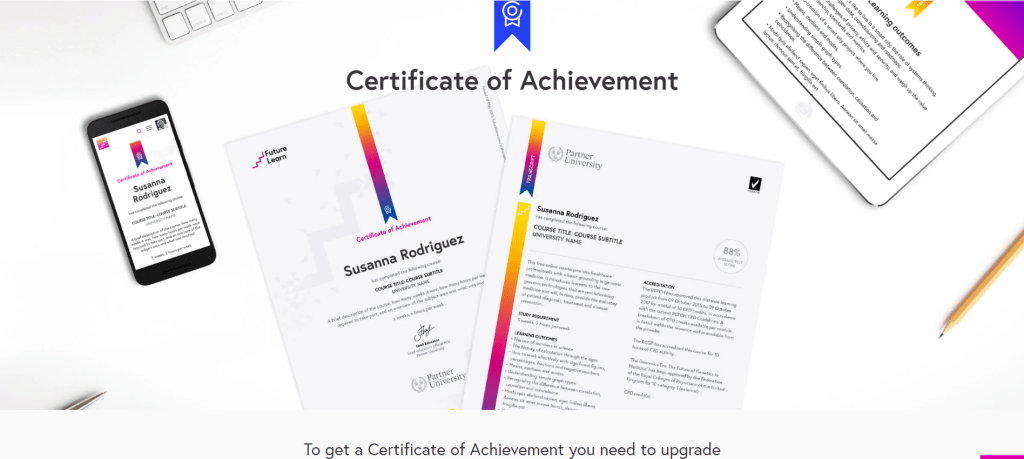
In this timeframe, you can study any of the courses that are available under the “Unlimited” classified courses and be aware there are many. You do receive a Certificate of Achievement but you do need to have upgraded to a paid course/subscription.
Overall.
Besides being mostly self-taught, when it comes to researching my ancestors through books I have read then any learning is positive. I have found that if I get at least one learning experience then it is a good outcome. Most of the time, I have got quite very positive outcomes in these learning environments i.e. UTAS and FutureLearn. In summary, keep learning as there is no way you can ever know everything.
Explore and Discover.
Acknowledgements: All photographs on this page have come from Pexel within WordPress. Other visuals have come from UTAS website & FutureLearn website.
 Ancestor Family