
During the COVID epidemic, I began a Family History Diploma with the University of Tasmania (UTAS) – Annotate a map in a unit: “Place, Image, Object”. I thought this would be fairly easy. Why? I knew all my direct ancestors lived in one place. Little did I realise the impact of seeing this displayed as a visual. My reflected statement summed it up: “My first reaction to seeing my draft map, where my direct ancestors once lived, worked, played and came to rest was… WOW!” This was in 2020… Maps are extremely useful. A visual tells the story better than words.

Even though my ancestors travelled from different parts of the world, mostly Britain, between 1877 and 1912, they eventually converged on Mackay, in the Pioneer Valley, Queensland, Australia.
The meaning of converge is: “1. to tend or move toward one point or one another: come together. 2. to come together and unite in a common interest or focus. 3. to approach a limit as the number of terms increases without limit”.1.
Five Families.
There are five different family connections. They did not all arrive in Mackay but from other locations in Queensland: Townsville in the north to Rockhampton in the south.
In August 1888, William Ray arrived in Mackay, followed by his wife to be, in September. They married in October. Tracking their movement in the early years, has been challenging. The first clue is via children born in 1893 and 1894. The location on their birth certificates shows Allandale which, after some investigation, is located on the Marian/Eton Road. Allandale is about 20 miles west of Mackay.
My Scottish connections, David Witherspoon Nicol and his wife Jessie, arrived in the area in 1892 around Pleystowe, 12 miles west of Mackay. David was an overseer. It is believed he was involved in the sugar industry. A number of his children were born in Pleystowe.


The Williams family arrived around 1906. An interesting and challenging family from Prussia who arrived from the south and settled in the Farleigh area, located about eight miles northwest of Mackay. Electoral rolls show the family located at “The Cedars” and farmers. It appears the Bluck family followed from the south around 1908.
Electoral rolls show this family at Beaumont Farm, Farleigh. They are also farmers. There is a connection between these families. This will become clearer soon.
The stragglers, the Austin gang, from Suffolk England, arrived towards the end of 1912. They disembarked in Townsville before boarding a coastal vessel to Mackay. It is believed they headed to Finch Hatton, approximately 42 miles west of Mackay, to stay with family before later moving to the Walkerston area.

Drawcard.

These families begin their discoveries of the Mackay region. Why did they all decide to make this area home? The big drawcard was the importance of sugar. Three families were directly involved in the industry. David Nicol, an overseer and the Williams and Bluck families being farmers. William Ray was a ploughman and involved in fieldwork for farmers. He may have also been a farmer but this has not yet been proven. The Austin’s were indirectly involved with the sugar industry at the beginning.
Early Days.
After John Mackay set up a cattle station at Greenmount, Mackay was established in 1862 on the south bank, near the mouth of the Pioneer River. The river’s shallow waters and significant tidal range caused larger steamers to anchor offshore at Flat Top Island, about four miles east of the town. Supplies and passengers were transferred to the town via smaller vessels.
Mackay’s transformation occurred after 1865 with John Spiller planting the first sugar cane leading to the first commercial sugar being crushed in 1868 at the Alexandra plantation. The growth of the industry expanded rapidly as did the population, with the Europeans exceeding 500 by the end of the 1860s.
The Pacific Islanders, known as Kanakas, were indentured labourers who arrived in mid-1867. Another story is needed to cover the treatment of these workers of the cane fields. The First Nations people of the Pioneer Valley are the Yuwi. Yet, another story waiting to be told. Mackay is located about 500 miles north of Brisbane, the capital of Queensland.
Moving About.

William and Hannah Ray moved around in the beginning. It can only be assumed this was due to William’s work. They did settle in Palmyra, about ten miles from Mackay, for an extended time spanning both World Wars. They eventually settled in Walkerston prior to William’s death in 1950. Hannah died seven years later.
David and Jessie Nicol moved to the Creighead Farm at the Leap, about 14 miles from Mackay, for a few years before returning to Pleystowe with four young children in tow. Looking at the patterns, I believe, David managed farms for a short period before moving on. The family eventually settled in the Hampden area, around 19 miles from Mackay.
David died in 1918. Jessie took over managing the farm along with her son’s. She died in 1935.
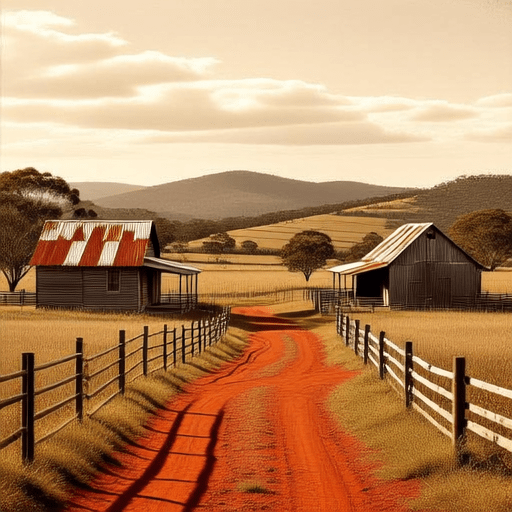
The Williams/Bluck connection occurred when Henry Bluck married Annie Williams in 1899 in Rockhampton. Frederick and Bertha Williams are still a mystery, having Prussian ancestry. Both families had connections with station work west of Rockhampton. The families never moved from the Farleigh area.
Bertha died in 1926, Frederick in 1938 and the farm passed to Annie. Henry died in 1930, after some health issues in the 1920s. Annie died in 1963.
Albert and Jane Austin moved to Rose farm at Bakers Creek, about six miles from Mackay, for all of the 1920s. The Great Depression may have caused the family to move back to Walkerston. During the next few years, it’s believed the family were carriers. Jane died before World War two commenced and Albert died before it ended.

Mackay Region.
This convergence of the families brings up a number of questions. Was it just luck? Was it as a result of the Universe having its say in a larger plan? Was it coincidence? I don’t believe in coincidence. There is always some reason behind every action.
The meaning of coincidence is: “the art or condition of coinciding; the occurrence of events that happen at the same time by accident but seem to have a connection.”2.

How many times did their paths cross, when conducting business in Mackay? Besides the 10 people already mentioned, the majority of their children would have married, producing more children and…
I am a storyteller and a family historian. I usually go looking for dead people. Maybe, I should now be looking for the living…
Further reading: An interesting article published in the Sydney Mail and New South Wales Advertiser (NSW : 1871-1912), Saturday 23 November 1895, pages 1059-1066 about Mackay, Queensland can be found at this link: https://trove.nla.gov.au/newspaper/article/162671689
Accessed: 31 Jul 2025.
Acknowledgements:
Map is the authors original work submitted to UTAS. Some dates will vary due to new research.
1. Convergence meaning: https://www.merriam-webster.com/dictionary/convergence
2. Coincidence meaning: https://www.merriam-webster.com/dictionary/coincidence
All photographs have been created in AI via ComfyUI.
PLEASE NOTE: The images are AI’s version of the written text and do not represent actual historical photographs, events or facts of the region and era.
 Ancestor Family