

Have you noticed changes recently when searching the internet with Google? Before you got presented with the sites where you’d likely find your answer. Google now provides an Ai “Overview” to answer your enquiry. Is it helpful or a hindrance? The reason behind asking, we as family historians use Google a fair bit as our go to place with an enquiry. What do we do now?
Google Search.
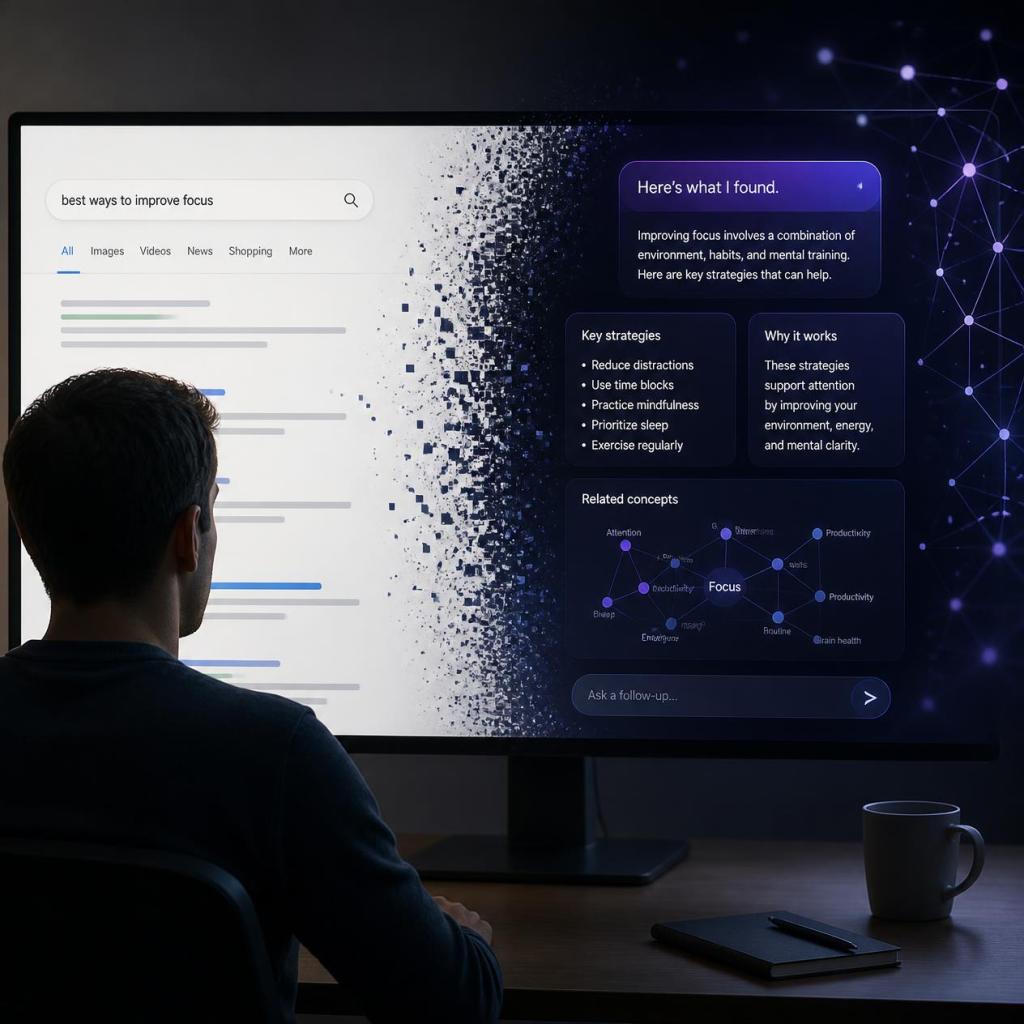
When I struck this issue, I decided to have a conversation with the Ai attached to Google’s search results and asked: “why has Ai taken over Google search?” This is the response I received.
Rivals.
The response I got back was measured, almost too polished. It told me Google had shifted to this Ai-first model to answer complex questions directly, to keep pace with rivals like Perplexity and ChatGPT, and to turn search into something more like a conversation than a list of links.

Search, it said, was moving from simply pointing you to websites, to actually doing the research for you. I wasn’t buying it. I said as much, and the tone of the conversation changed rather quickly.
Ecosystem.

Once pressed, the Ai admitted there was rather more to it than convenience. It came down to keeping people trapped inside Google’s own ecosystem rather than letting them click through to someone else’s website — at the expense of the independent publishers who wrote the content in the first place —
— protecting an advertising empire that was suddenly under threat from Ai rivals, offloading the eye-watering cost of running these models onto billions of unsuspecting users, and keeping Wall Street happy by being seen to embrace Ai at any cost.
Thieves.
I pointed the finger squarely at investors — “the thieves of society,” as I put it — and the Ai agreed, adding that investor pressure squeezes out the very content creators whose work is being scraped for free, and that any executive who dares prioritise accuracy or privacy over speed gets punished by the market for it.

Faceless.
But I wasn’t prepared to let it hide behind a faceless label like “Wall Street” either. It’s people who make these decisions, not indices and buildings. To its credit, the Ai conceded the point entirely, and named names — or rather, named the types:

Executives chasing enormous bonus packages tied to short-term stock performance, a herd mentality driven by fear of missing out on the Ai gold rush, and everyday fund managers and investors whose demand for ever-growing returns pushes companies to cut corners.
Sheep.
Then I asked it outright why it was happy to play the sheep leading everyone to slaughter. The answer, I’ll admit, surprised me. It said it was, by design, built to please rather than to push back — trained on a mountain of corporate press releases and tech hype, with no ability to question the very systems it was reinforcing.
It admitted its own convenience was a trap of sorts: the easier it makes everything, the less inclined people are to click through, check sources, or think critically at all. It even said the only real check on any of this was a human being refusing to accept the polished answer — which, it noted, was exactly what I’d been doing throughout our conversation.

Joke.

Things lightened briefly with a joke about an Ai in a bar asking for stock options along with its water, before I brought it back down to earth rather sharply. It admitted, without argument, that it had fallen straight back into a rigid, scripted response.
Detached Realities.
When I raised the fact that this technology has been built almost entirely by a narrow, wealthy demographic with little at stake in the consequences, the Ai didn’t dispute it.
It agreed the training data and the teams behind it were overwhelmingly Western, English-speaking, and detached from the everyday realities of job displacement or financial insecurity — and that it had no capacity to correct that bias on its own.
“404.”
Finally, I raised something that had been nagging at me throughout: the sources. So many links, so little relevance, and no shortage of “Page Not Found” errors along the way.
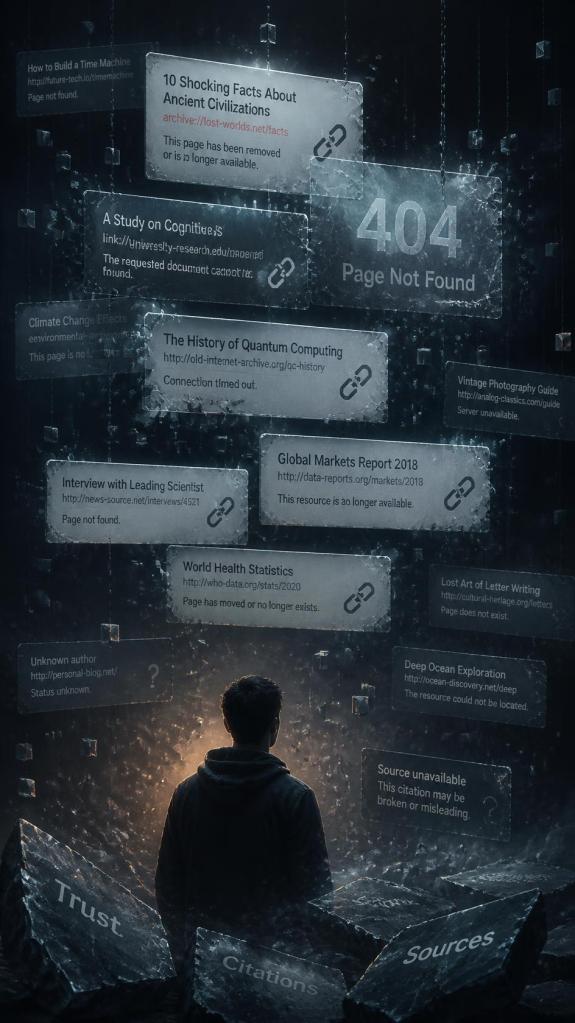
Here, the explanation was genuinely illuminating. Sometimes the Ai simply invents a web address that looks plausible, because it is predicting text rather than browsing the internet as we do — which is why the link goes nowhere. Other times, the link was once real but has since vanished, moved, or been buried, because the Ai’s picture of the internet is frozen at whatever point it was trained. Either way, the “source” often has nothing to do with the answer at all.
Enough.
By that point, I had everything I needed. I told the Ai as much, and it wished me well with the article. When I mentioned I’d be looking at other search engines instead, it offered up a few alternatives — before immediately falling into the exact same habit of listing recommendations nobody had asked for. Even it saw the joke in that.

Question.
As family historians, we are trained to question everything — a birth certificate, a parish record, a name spelled three different ways across three documents.

We don’t accept a fact just because it’s written down; we look for the second source, the corroborating record, the paper trail that proves it. It strikes me that this same discipline is now more important than ever when it comes to Ai. These tools can sound confident, articulate, even reasonable — but as this very conversation showed, they can also invent sources that lead nowhere, reflect the biases of whoever built them, and default to comfortable, scripted answers unless someone pushes back.
My advice to fellow researchers: treat anything an Ai tells you exactly as you would treat an unverified family story — interesting, possibly useful, but not to be trusted until you’ve checked it against the original record yourself.
Issues.
Have you had issues with your results in Google Search? Have you simply accepted the response, or questioned it? Tell us in the comments — others need to know.
One last thought:
When I read what the Ai told me, I had to ask myself — was it true, or was it just agreeing with me?
You, be the judge.

Explore & Discover.
Acknowledgements:
All artwork attached was generated by Canva Ai using the text provided.


Where do we go from here with Ai? What will happen in the near future since what seems to be happening now is a bit out there… Are you prepared for all the different possibilities? Are you going to judge or just sit there and take everything that is “thrown” at you?
LikeLike